Advanced Radial & Focused Shockwave Therapy in Columbia, MO
Serving patients throughout Columbia, Jefferson City, Moberly, Ashland, Centralia, Boonville, and the surrounding areas.

Serving patients throughout Columbia, Jefferson City, Moberly, Ashland, Centralia, Boonville, and the surrounding areas.
When pain has been hanging around for weeks or months, resting and hoping it goes away may not be enough. Persistent tendon, muscle, and connective tissue problems can become frustrating, especially when they keep you from exercising, playing sports, working comfortably, or enjoying everyday activities.
At Focus On Health Chiropractic, we use both radial and focused shockwave technology through STORZ Medical, as advanced treatment options for stubborn musculoskeletal problems. The type of shockwave we use depends on what we find during your evaluation, including the tissue involved, where the problem is located, how deep it is, and what you’re trying to get back to doing.
But we don’t simply treat a painful area and send you on your way. We want to understand what’s contributing to the problem, address those factors, restore movement, and build the strength you need to return to the activities that matter to you.
Although we’re sports chiropractors, you don’t have to be an athlete to receive this level of care. We work with everyone from competitive athletes and weekend warriors to desk workers, active adults, and people who simply want to get through the day with less pain
We've helped countless people return to doing what they love, using shockwave therapy as part of a whole-body wellness approach. If you’re suffering, let’s see if it can help you too.
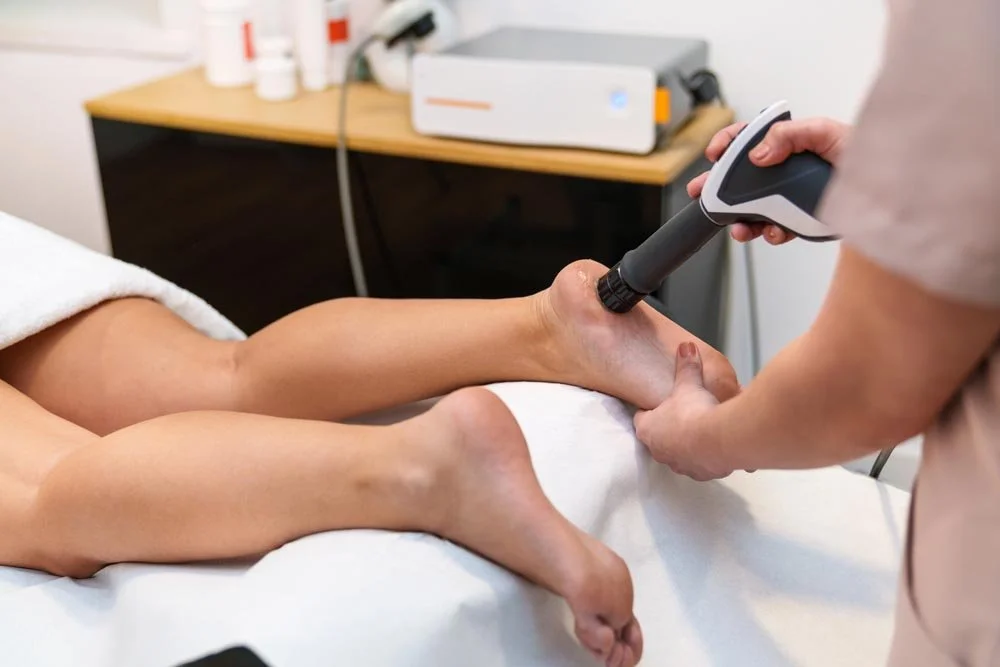
Shockwave therapy uses acoustic pressure waves to deliver a mechanical stimulus to targeted areas of the body. Unlike an injection or surgery, shockwave treatment is noninvasive and requires no incision.
We offer two types of shockwave therapy: radial and focused. While both use acoustic energy, they deliver that energy differently.
Radial shockwave therapy sends pressure waves outward from the applicator and can be useful when a broader region of tissue needs to be addressed.
Conditions we treat using radial shockwave therapy include:
Plantar fasciitis and heel pain
Achilles tendon pain
Shin splints
Patellar tendon pain
Tennis elbow and golfer's elbow
General muscle tightness and soft tissue pain
Chronic tendinopathies
Areas of scar tissue or restricted tissue
Focused shockwave therapy directs energy toward a more specific point and can reach deeper tissues.
Conditions we treat using focused shockwave therapy include:
Chronic tendon injuries and tendinopathies
Plantar fasciitis
Achilles tendon injuries
Patellar tendon injuries
Rotator cuff and shoulder pain
Tennis elbow and golfer's elbow
Calcific tendonitis
Deep or localized areas of pain and tissue dysfunction
Fracture/stress fracture
Bone edema (bruises)
The choice between radial and focused treatment isn’t about one being better than the other. It’s about matching the treatment to the problem. Depending on your condition, we may use one approach, the other, or incorporate both into your care plan.
Radial and focused shockwave therapy can be used separately or together, depending on the condition being treated and where the problem is located.
Using both approaches in the same treatment plan allows our sports chiropractor to address a larger area of irritated or restricted tissue with radial shockwaves, while using focused shockwaves to target a specific area that needs more concentrated treatment.
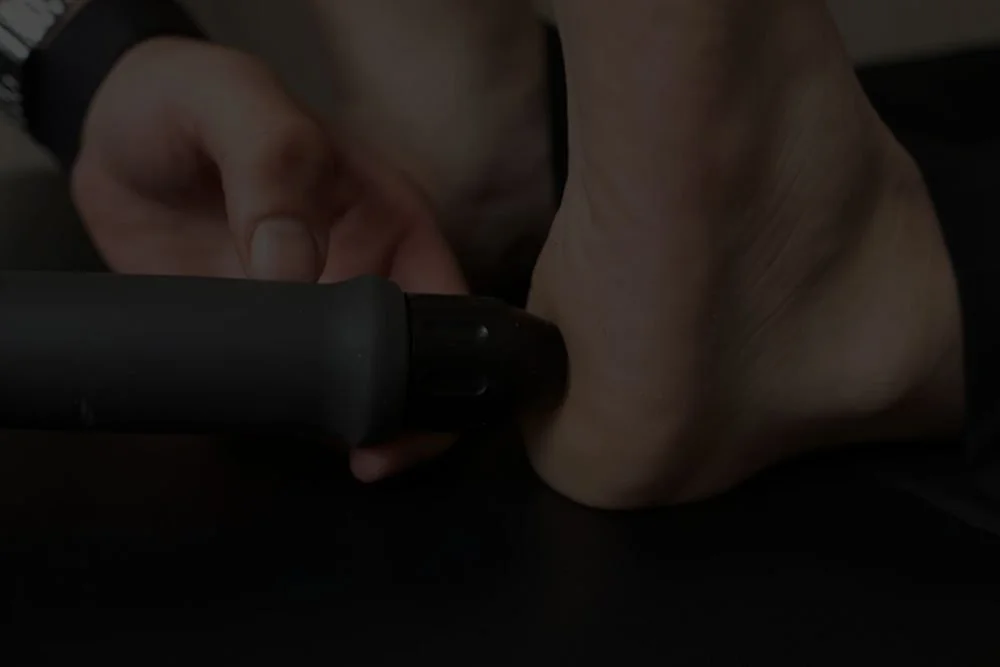
The shockwave applicator delivers repeated acoustic pulses to the targeted tissue. These pulses create a controlled physical stimulus that influences the local tissue environment and the body's response in the treated area.
For some chronic or overuse conditions, this can be useful because the problem may not be inflammation. Tendons, fascia, muscles, joints, and surrounding tissues can change due to repetitive loading, altered movement, weakness, or inadequate recovery.
The goal is to use the treatment to help create an opportunity for better movement and recovery, then take advantage of that opportunity through rehabilitation and strengthening.
Shockwave treatment may be appropriate for a wide range of patients when an evaluation shows that it fits their condition and goals.
We may use radial or focused shockwave therapy with:
Middle school and high school athletes
College athletes
Competitive athletes and runners
Weightlifters
Weekend warriors
Recreational athletes
Active adults
People returning to exercise
Desk workers or sedentary patients
Patients with persistent musculoskeletal pain
People with chronic tendon or soft-tissue problems
You don’t have to be highly active to benefit from this type of care. Someone who has never considered themselves an athlete can receive the same detailed evaluation and individualized treatment approach.
The difference is simply what getting better means to you.
For one person, it may mean returning to competitive sports. For another, it may mean walking around the neighborhood, climbing stairs, working without pain, or playing with their grandchildren. No matter the objective, our experienced chiropractic care team and proven services can help you get healthy and active again.

When appropriate for your condition, radial and focused shockwave therapy may offer several advantages as part of a larger treatment plan.
Benefits of shockwave treatment include:
Noninvasive treatment
No injections or incisions
No reliance on pain medication
Targeted treatment of painful areas
Effective bone healing
Ability to treat a broader region of tissue
Supports the body's natural recovery processes
Reduces pain and improves function
Can be combined with active rehabilitation
Can complement chiropractic and manual therapy
Allows patients to continue working toward movement and strength goals
One of the biggest benefits we find when using shockwave therapy is that it can easily become part of an active recovery strategy. We typically use this treatment to help you get to the next step.
Suppose you have chronic plantar heel pain. You could treat the painful area repeatedly, but we also want to know what is contributing to the problem.
Are your ankles lacking mobility? Is your foot or lower leg weak? Have you changed your training volume? Are you compensating for an old injury? Is your movement pattern placing excessive demand on the tissue?
The same concept applies to tennis elbow, tendon pain, shoulder problems, and other persistent injuries.
At Focus On Health, movement assessment helps us look beyond the location of your pain.
We use diagnostic assessments including:
Selective Functional Movement Assessment
Mechanical Diagnosis and Therapy (MDT) or McKenzie Method
Dynamic Neuromuscular Stabilization (DNS)
Functional Movement Screen (FMS)
Y Balance Test
Fundamental Capacity Screen (FCS)
Kinetisense 3D motion capture
This gives us a more complete picture of how your body is moving and where limitations may be affecting your symptoms.
Once symptoms improve, functional strength training can help you handle the demands that may have contributed to the problem in the first place. This extra step in the process means we’re not just treating with shockwave, we’re exercising the damaged tissue so it becomes healthier and stronger, protecting your investment in both your treatment and your body.
That’s the difference between treating an injury and preparing your body for what comes next.
Athletes often want to get back to their sport as quickly as possible, but returning too soon can create another problem.
Our sports chiropractic approach considers both recovery and performance. We may incorporate radial shockwave, focused shockwave, or both into care for sports-related tendon and soft-tissue problems, while other services address mobility, joint function, strength, and movement quality.
We work with athletes from youth sports through college, professional, and Olympic levels, as well as active adults who want to keep performing at a high level.
For an athlete, the ultimate goal is to restore the ability to train, compete, recover, and perform pain-free.
If you’re ready to get off the bench, we’re ready to keep you off it.

Shockwave therapy is one component of our broader approach to pain relief, rehabilitation, movement, and performance. Depending on your needs, we may combine radial or focused shockwave treatment with other services.
The natural, noninvasive chiropractic solutions we offer include:
Chiropractic adjustments and joint manipulation: Help address restricted joint mobility and improve movement
Manual therapy: Uses hands-on techniques to address soft-tissue and movement restrictions
Graston Technique: Uses specialized instruments to address soft-tissue restrictions
Kinesiotaping: Provides support and movement feedback during activity
Dry needling: Targets specific muscular and neuromuscular areas when appropriate
High Level Laser Therapy (HLLT): Uses therapeutic light energy as another safe treatment option
Radio frequency therapy: Uses radio-frequency energy as part of a tissue-focused treatment approach
Massage therapy: Helps address muscular tension, soreness, and soft-tissue concerns
Functional strength training: Builds strength, stability, coordination, and physical capacity
Health coaching: Helps patients develop sustainable strategies for their health and wellness
The Movement Lab: Provides personal training and small group classes that bridge rehabilitation and performance
Shockwave treatment can feel intense and may cause mild to moderate discomfort, particularly when treating a sensitive area. The sensation can vary depending on the area being treated and whether radial or focused shockwave is being used.
We can adjust treatment parameters based on your tolerance and will explain what to expect before treatment begins.
Treatment time varies depending on the area being addressed, the type of shockwave being used, and your individual needs. We’ll explain the process before we begin so you know what to expect.
The number of treatment sessions depends on the condition, how long you’ve had symptoms, the type of shockwave treatment being used, treatment parameters, and how your body responds.
We’ll give you an approximate number based on your individual wellness plan before treatment begins.
In many cases, shockwave is combined with exercise and rehabilitation rather than replacing them. However, you may need to modify your activity depending on the condition and stage of recovery.
The goal is to help you continue making progress while giving the affected tissue an appropriate opportunity to recover and adapt.
No. They use different forms of energy and work differently. Shockwave therapy uses mechanical acoustic pressure waves, while therapeutic ultrasound uses high-frequency sound waves to deliver energy into tissues.
No. Both are noninvasive treatment options, but they use completely different types of energy. Shockwave therapy uses acoustic pressure waves, while Class 4 High Level Laser Therapy uses therapeutic light energy.
Depending on the problem, one may be more appropriate than another, or different therapies may be combined.
No. Shockwave therapy is commonly used for persistent or chronic musculoskeletal problems, but whether it’s appropriate depends on the specific condition, tissue involved, and stage of healing.
Shockwave therapy is considered a noninvasive treatment with a favorable safety profile when administered by a trained professional. As with any treatment, whether it is appropriate for you depends on your individual condition and medical history.
A stubborn injury can change the way you live. You may stop exercising, avoid your favorite sport, change how you walk, or simply start accepting discomfort as something you have to live with.
Like you, we don’t want that to be the end of your story.
At Focus On Health Chiropractic, radial and focused shockwave therapy are two tools we can use to help address many musculoskeletal problems. But our bigger goal is to understand why the problem developed, help you recover, and give your body the strength and movement capacity to handle what comes next.
If moving comfortably is on your to-do list. Let’s get started.